

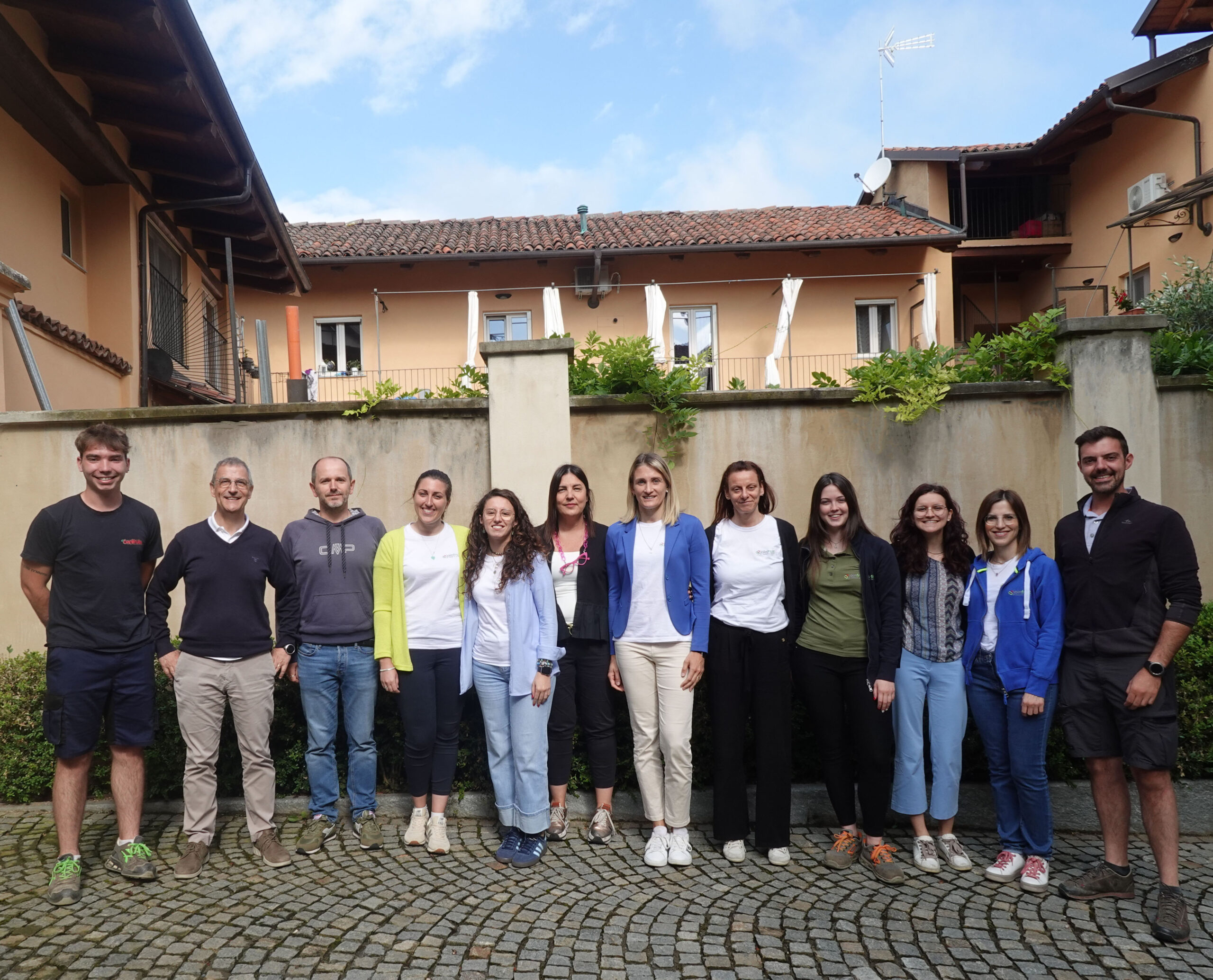
First “Cherry Tree Day”per Sanifrutta to its conferrers: the company, a partner of O.P. Joinfruit, met his producers in the field to present the cherry development project and new varieties with an exclusive licensing agreement for north-west Italy.
Sanifrutta's strategy for cherry plant cultivation began in 2014 as part of the integration of planning with O.P. Joinfruit, of which the cooperative is a member, with the aim of substantially increasing the area involved in the coming years: “at present – they explain Alex Tallone e Alberto Boschero, Joinfruit and Sanifrutta Technical Managers – The cherry surface area planted by the Sanifrutta group is around 18-20 hectares, comprising plots in production and those in the development phase, mainly located within the group's farms and at some associated producers who immediately believed in the crop's potential. The objective is to reach a total of 70-80 hectares in the next 6-7 years, with an annual output of approximately 1000-1200 tonnes of produce.”
As this is an extremely technical crop, Sanifrutta initially worked on acquiring all the relevant know-how, to then pass on to its producers when the time was right: “in these years – Tallone and Boschero continue – We have worked hard and relentlessly to filter all the useful agronomic technical information for the success of this ambitious project, mainly through visits and technical discussions in the most important cherry-growing districts worldwide, meeting authoritative commercial groups from other producing and exporting countries in Europe, the USA, and South America, to understand and refine experiences from both the agronomic practices viewpoint (cultivation, pruning, fertilisation, irrigation, types of rain covers and insect nets) and in the search for the most interesting varieties that would best adapt to our Cuneo piedmont territory. The Cherry Day officially represented the launch and sharing of all these experiences with our producers.”
There are two cornerstones to the Sanifrutta group's strategy: Firstly, the organoleptic qualities of the fruit, which must taste good and therefore be appreciated for their flavour by the final consumer. Secondly, and equally fundamental, profitability for the farmers, which must be ensured by the qualitative characteristics of the selected varieties (such as the crispness of the flesh, a superior calibre, and an attractive sheen to the fruit) and, naturally, quantitative characteristics, with productivity that guarantees a fair gross sales value per hectare for the cherry grower. The market ensures profitability on large-calibre fruit, so the objective must be to produce cherries of a large size (30+ mm), by selecting varieties that also show better tolerance to stem cracking in the field compared to the standard varieties cultivated in our region to date.
“In recent years, we have committed ourselves to selecting the varieties that we believe are most suited to our area. – the Sanifrutta technicians continue – with particular attention also to the ripening periods, because as an O.P. we want to focus above all on widening the harvesting window and supply to the markets, exploiting the soil and climatic characteristics of the territory, which boasts a production area extending from 350 metres in altitude up to 600 metres above sea level”
As of today, Sanifrutta's cherry selection includes established varieties such as Kordia and Regina, which ripen from the second half of June. Thanks to the selection of a German breeder located on Lake Constance, an area with climatic conditions very similar to the Cuneo region, four additional varieties have been identified. These ripen sequentially from the beginning of July for approximately three consecutive weeks.
“Thanks to Final varieties – Commercial Brand “Cerasina” - concludes Eraldo Barale, CEO of Sanifrutta – for which our group has signed an exclusive license agreement for North-West Italy, we can assure our farmers of greater certainty regarding the crops” adaptability to our region, reduced sensitivity to cracking, and the qualitative characteristics and harvest period that we believe are ideal for ensuring potentially increased profitability for cherry cultivation, thereby broadening the range of varieties currently available in our region.”


 English
  Italian